
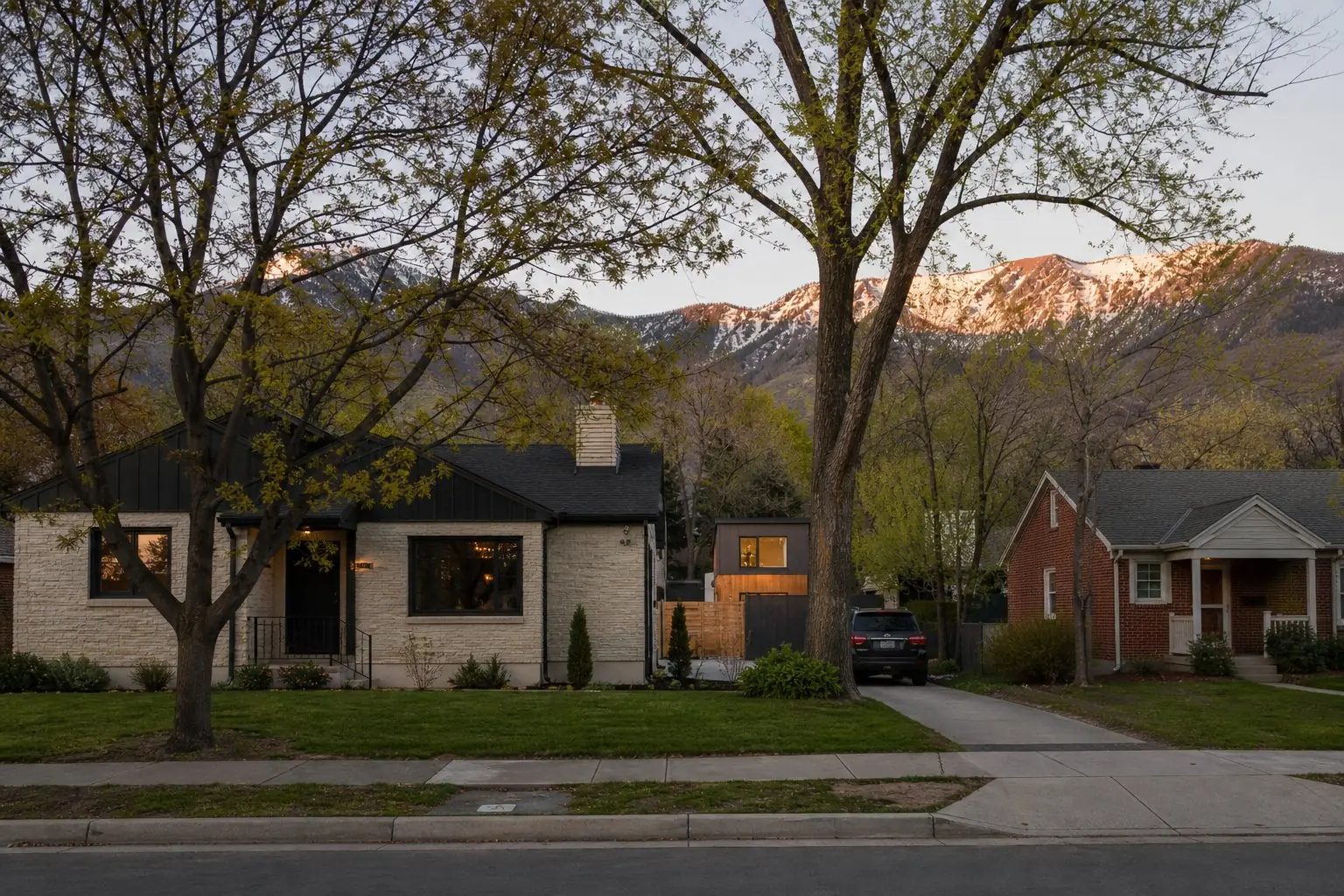
Salt Lake County, Utah
ADUs Across Salt Lake County
There is no single set of ADU rules for Salt Lake County. The rules depend on which city, town or unincorporated area your property is in, and they differ more than most people expect.
It is easy to assume a neighbor's answer applies to your lot. Someone in Salt Lake City can build a backyard unit on a small lot with no minimum lot size; someone in Murray needs at least 10,000 square feet for a detached ADU. Both answers are right, for their own cities. The county's list of local governments includes more than twenty cities and towns, each with its own code, and unincorporated areas follow a separate county chapter.
So the first question for any Salt Lake County property is simple: whose rules apply? This page answers that, compares the seven cities we cover, and points you to the page for your city.
Who reviews an ADU where you live
Incorporated cities such as Millcreek, Salt Lake City, Murray, South Salt Lake, Holladay, Sandy and Cottonwood Heights adopt their own ADU rules and run their own planning and building reviews. Confirm the department for your city before applying.
MSD communities. The Greater Salt Lake Municipal Services District serves the cities of Magna, Kearns, White City and Emigration Canyon, the towns of Copperton and Brighton, and unincorporated Salt Lake County. Four of those became cities, and Copperton a town, on May 1, 2024. Each has its own municipal code, and building permits are applied for through the MSD's online CityWorks portal.
Unincorporated county land, from canyon areas to residential pockets near Salt Lake City, is governed by the County Mayor and Council, with two planning commissions: the Salt Lake County Planning Commission and the Mountainous Planning District Planning Commission.
How the seven cities compare
A summary of the verified rules for detached ADUs. Each city page explains the details and exceptions.
| City | Detached ADU and lot | Detached size limit | Parking for the ADU |
|---|---|---|---|
| Millcreek | Permitted, 8,000 sq ft minimum lot, rear yard | Lesser of the house's gross square footage or 1,000 sq ft | 1 stall |
| Salt Lake City | Permitted, no minimum lot size | 1,000 sq ft gross floor area | 1 stall, waived near transit or city bike routes |
| Murray | 10,000 sq ft minimum lot | Under 50 percent of the house and no more than 1,000 sq ft | 1 extra, 3 total |
| South Salt Lake | R1 and RM only, 6,000 sq ft and 50 ft wide | Lesser of 50 percent of the house or 1,000 sq ft | 1 per ADU |
| Holladay | Any residential lot with a single-family home | 800 to 1,400 sq ft footprint, by lot size | 1, plus replacing lost spaces |
| Sandy | Adopted September 15, 2026, 11,000 sq ft minimum lot; effective on publication | Smallest of 2,000 sq ft, 75 percent of the house footprint, or the accessory limit | 1 under 650 sq ft, 2 at 650 or more |
| Cottonwood Heights | Conditional use with a Planning Commission hearing | Accessory building limits | 2 |
Some things are close to universal among these seven. All require an owner to live on the property in some form, though who counts as the owner differs. None allows a detached ADU to be used as a short-term rental. Six prohibit separate utility meters; for Salt Lake City we did not find a stated rule.
Unincorporated Salt Lake County
These rules come from County Code Chapter 19.15 and apply to unincorporated areas only, not to the MSD's cities and towns or any incorporated city:
- Internal ADUs are a permitted use on single-family lots of 6,000 square feet or more in the listed zones; detached ADUs need 7,000 square feet or more. No ADU in a townhome, multi-family PUD or other attached unit type.
- One ADU per lot; no explicit maximum size, with limits coming from lot size, height, coverage and setbacks.
- Detached units: a 10 foot rear setback, 6 feet from the house, and a permanent concrete slab unless above a garage.
- Owner occupancy, with a recorded notice and affidavit that a new owner must re-sign; one added parking space; no short-term rentals; a business license before renting.
- Written confirmation from the water supplier before a building permit, and water and sewer availability letters, or Health Department verification for a septic system.
ADU types across the county
Most cities here recognize an internal ADU and a detached ADU, and some add an attached category. The choice usually comes down to the house and the lot: basement ADUs and garage conversions reuse structure, while detached ADUs need yard space and utility runs. Our ADU construction overview compares every type.
Property feasibility, wherever you are
The questions are the same everywhere, even when the answers are not: zone, lot size and width, the size and height of the house, setbacks and coverage, parking, utilities, and who will live on site. Our feasibility review applies your city's rules to your lot, and can I build an ADU? walks through the self-check.
Utilities are split up too
Sewer and water providers do not follow city lines. On the east side, sewer is split among special districts such as Mt. Olympus and Cottonwood Improvement Districts and some cities' own systems. Mt. Olympus's adopted 2026 schedule treats a property with an ADU as one more residential equivalent plus one capacity fee. Water comes from Salt Lake City Public Utilities, Jordan Valley Water Conservancy District, Holliday Water Company and city systems, depending on the address. Where there is no public sewer, the County Health Department permits onsite wastewater systems. See ADU utility connections.
The state layer
State law sits under all of this. Utah Code 10-21-303 (cities) and 17-80-303 (counties) make internal ADUs a permitted use in primarily residential areas and limit how they can be restricted. Utah Code 10-21-304, in effect since October 1, 2026, requires qualifying municipalities to allow detached ADUs on lots of 11,000 square feet or more. Utah ADU laws explains both.
How a project runs, and what drives cost
The sequence is similar across the county: feasibility, design, engineering, the city's ADU or land use approval, the building permit, construction and inspection. The ADU permit process walks through it generally, and our process shows how we coordinate each step. Costs are driven by the type of unit, site and foundation work, utility runs and provider fees, access, finishes, and each city's permit fees. See the Utah ADU cost guide.
Wherever your property is, See What Your Property Can Support.
Questions about ADUs in Salt Lake County
Are ADU rules the same everywhere in Salt Lake County?
No. Each city and town has its own code, and unincorporated areas follow the Salt Lake County Code. Minimum lot sizes for a detached ADU among the seven cities we cover range from no minimum in Salt Lake City to 11,000 square feet under Sandy's new ordinance, and approval ranges from staff review to a Planning Commission hearing in Cottonwood Heights.
Who handles permits in Kearns, Magna or Emigration Canyon?
The Greater Salt Lake Municipal Services District provides planning, zoning and building services for the cities of Magna, Kearns, White City and Emigration Canyon, the towns of Copperton and Brighton, and unincorporated Salt Lake County. Each of those communities has its own municipal code, so the MSD applies that community's rules.
What does unincorporated Salt Lake County require for an ADU?
County Code Chapter 19.15 applies to unincorporated areas only. It allows internal ADUs on qualifying single-family lots of 6,000 square feet or more and detached ADUs on lots of 7,000 square feet or more, with one ADU per lot, owner occupancy, one added parking space and no short-term rentals. A building permit cannot be issued until the water supplier confirms in writing that the ADU meets its requirements.
Does the new state detached ADU law apply to unincorporated areas?
Utah Code 10-21-304, in effect since October 1, 2026, applies to municipalities that meet its definition, not to counties. We found no county counterpart in the state code, so unincorporated areas continue under the county's own ADU chapter.