
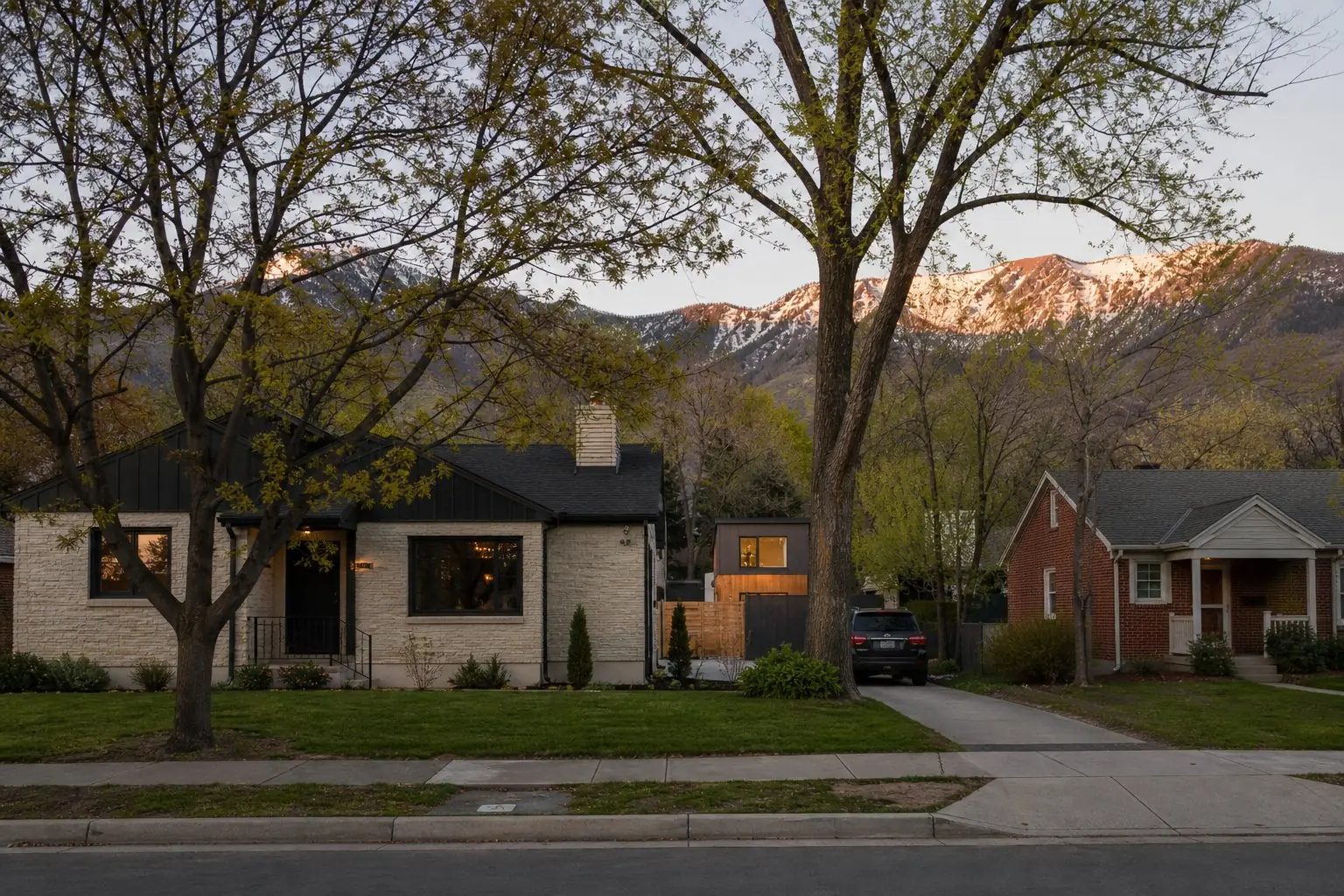
Property feasibility
Can I Build an ADU on My Property?
Most of the answer comes from ten questions, and the order matters. The first four can rule a property in or out before anyone picks up a tape measure.
There is no single yes or no for Salt Lake County. The answer depends on which city governs the lot, what the lot and house look like, and what you plan to do with the unit. The questions below are the ones we work through first on any property, in the same order. Answer them honestly and you will know whether an ADU looks likely, unlikely or worth a closer look.
1. Which city's rules apply?
ADU rules are set city by city, inside limits set by state law. Millcreek, Murray, Salt Lake City, South Salt Lake, Holladay, Sandy and Cottonwood Heights each have their own chapter, and they differ on nearly every point below. Salt Lake County's own ADU rules apply only to unincorporated areas. Confirm which jurisdiction the parcel is in before you read anything else, because every later answer depends on it.
2. Is it a single-family home in a zone that allows ADUs?
State law makes an internal ADU a permitted use in areas zoned primarily for residential use, inside an owner-occupied detached single-family home (Utah Code 10-21-303). Beyond that, cities draw their own lines. South Salt Lake permits ADUs only in its R1 and Residential Multiple districts. Salt Lake City permits them in every residential district where single-family detached homes are allowed. Cottonwood Heights allows internal ADUs as a permitted use but treats detached ADUs as a conditional use that goes to a Planning Commission public hearing. If the home is a townhome, condo or duplex, expect a different answer.
3. Will you live on the property?
Every city we cover requires owner occupancy in some form, and the wording matters:
- Salt Lake City counts a person related by blood, marriage or adoption to someone on the deed.
- Holladay counts an immediate family member such as a spouse, parent, child or sibling.
- Cottonwood Heights defines residence as at least 200 days per calendar year.
- Sandy requires an individual owner or the trustor of a family trust; an LLC or corporation cannot hold the permit.
Millcreek, Murray and South Salt Lake tie the requirement to a notice or affidavit recorded with the Salt Lake County Recorder. Our page on ADU owner occupancy compares the details.
4. How do you plan to use it?
If short-term rental income is part of the plan, check it now. Detached ADUs cannot be short-term rentals in any of these cities, and most ban short stays in every ADU. Salt Lake City, Murray and South Salt Lake extend the ban to the main house as well. Sandy lets an attached ADU alternate between long-term and short-term use with approvals for both. See ADU short-term rental rules.
5. How big is the lot?
Lot minimums mostly apply to detached ADUs, and they range widely: none in Salt Lake City, 8,000 square feet in Millcreek, 10,000 in Murray, and 11,000 in Sandy's new rules adopted September 15, 2026. South Salt Lake requires 6,000 square feet and a lot at least 50 feet wide along its whole depth. For internal ADUs, state law lets a city prohibit one on a lot of 6,000 square feet or less. The full comparison is in ADU lot size requirements.
6. How big is the house?
This surprises people. Several cities cap a detached ADU by the size of the main house. Millcreek allows the lesser of the house's gross square footage or 1,000 square feet. Murray requires less than 50 percent of the house, and South Salt Lake the lesser of 50 percent (not counting the garage) or 1,000 square feet. A modest house on a large lot can therefore mean a modest ADU. Height is often tied to the house too. See ADU size.
7. Where would it sit?
Picture the unit on the lot. Millcreek and Cottonwood Heights require a detached ADU in the rear yard. Salt Lake City and Murray keep it out of the front yard, and Sandy does too except on lots of at least 40,000 square feet. Side and rear setbacks run from 3 feet in Salt Lake City to 10 feet in Murray and Sandy, and more in some Cottonwood Heights zones. Millcreek and Sandy do not allow an ADU inside a recorded easement. Details are in ADU setback requirements.
8. Where does the extra car go?
Most cities want at least one more off-street space. Murray requires three in total for a property with an ADU, and Cottonwood Heights requires two added spaces for a detached unit. Salt Lake City waives its one-space rule near transit or city bike routes. A garage conversion usually means replacing the lost garage parking somewhere else. See ADU parking requirements.
9. Can the utilities reach it?
For a detached unit, the sewer line is often the deciding factor: it has to reach the existing connection with enough fall to drain. Water and electrical service matter too, and most of these cities prohibit separate utility meters for an ADU. Start with ADU utility connections.
10. Is anything else in the way?
Steep ground, hazard areas and private rules come last on the list but can end the idea. Millcreek does not allow a detached ADU on slopes of 30 percent or greater, and Cottonwood Heights restricts development on slopes over 30 percent. If there is an HOA, Utah law bars an HOA rule from prohibiting an internal ADU, but the state HOA office says an HOA can prohibit a detached one. Read your CC&Rs early. Access for construction and for the occupant is covered in ADU site access.
Reading your answers
Questions 1 to 4 decide whether an ADU is allowed and useful to you. Questions 5 to 10 decide which type fits and how large it can be. A property that fails the detached test often still works for an internal ADU, a basement unit or a garage conversion.
When to get a second set of eyes
If your answers are mostly yes, or mostly "not sure", the next step is to check them against the real lot. Our ADU feasibility review covers the same ground with measurements, utility locations and the current code for your address. To start, See What Your Property Can Support.
Questions about building an ADU
Can I build an ADU if my lot is small?
Often an internal ADU is still possible, because state law limits what cities can require for one inside an owner-occupied home. A city may prohibit an internal ADU on a lot of 6,000 square feet or less, and detached ADUs usually carry a higher lot minimum, which varies by city. A small lot tends to change which type fits rather than ending the idea.
Do I have to live on the property?
In every city we cover, yes, in some form. The details differ: some cities accept a relative or immediate family member, Cottonwood Heights sets a 200 day per year residency test, and Sandy does not allow a home owned by an LLC or corporation to hold an ADU permit. Check your own city's wording before you plan.
Can my HOA stop me from building an ADU?
For an internal ADU, Utah law bars an HOA rule from prohibiting one, and the state HOA office says that includes CC&Rs, although the statute itself says rule. For a detached ADU there is no such protection, and the state HOA office says an HOA can prohibit one. Read your governing documents early.
Is this the same as a feasibility review?
No. These questions help you sort out the likely answer on your own. A feasibility review checks the same ground on your actual lot, including measurements, utilities and the current code for your address, and flags what still needs the city's confirmation.